PDO Thread Lift in Lansing, MI
A thread face lift is one of the most requested non-surgical procedures in the greater Lansing area, and for good reason. Patients in their late 30s through 60s who notice early jowling, brow descent, midface sagging, or neck laxity are discovering that a PDO thread lift can restore definition and firmness in a single in-office visit — with results that continue to improve as new collagen forms over the weeks that follow.
At Maison Zolara, located on the west Lansing corridor at 4820 W Saginaw Hwy, every thread procedure is performed by our licensed registered nurse (RN) clinician who holds specialty certification in facial and body contouring PDO threads from the National Laser Institute — and is supervised by our on-staff Medical Director. That combination of hands-on expertise and physician oversight is what separates a medically sound thread lift from the inconsistent results that drive searches like thread lift gone wrong.
Thread lift cost is one of the most searched questions in the Lansing market. Pricing starts From $600 per session; Maison Circle members start From $525. Final pricing is confirmed at your complimentary consultation, where thread type, zone count, and treatment goals are assessed.
- ✓Absorbable Polydioxanone (PDO) Threads
- ✓FDA-cleared technology
- ✓All skin types
- ✓MD-supervised
- ✓RN-performed
- ✓Free consultation
- ✓Package pricing available
How It Works
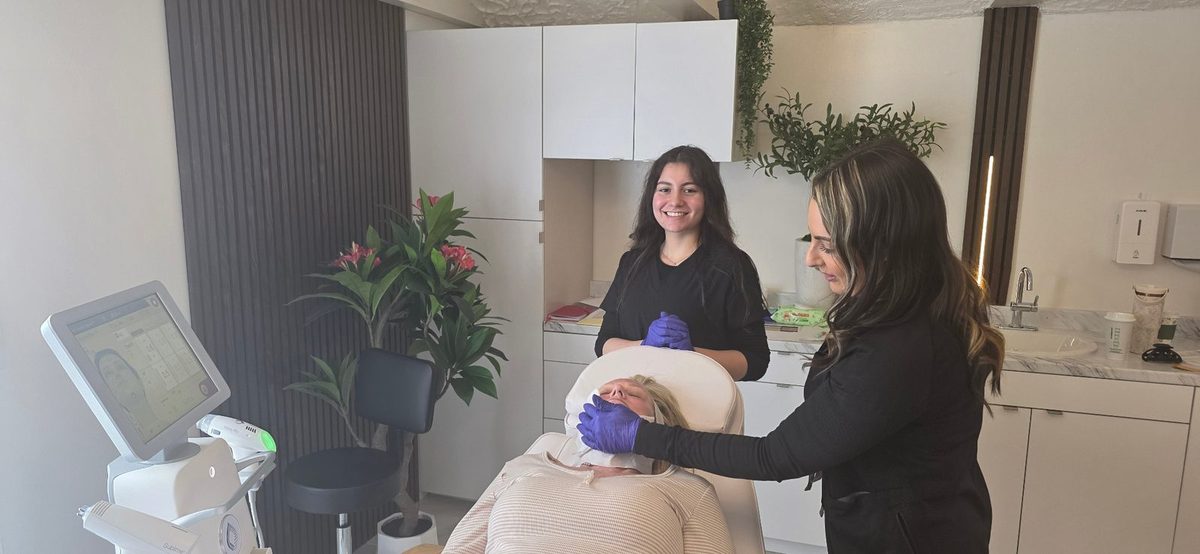
A PDO thread lift uses fine, biocompatible sutures made from Absorbable Polydioxanone (PDO) — the same material used in cardiovascular and orthopedic surgery for decades — to mechanically reposition sagging facial tissue while simultaneously triggering the body's own collagen-renewal cascade.
The mechanism operates on two levels. First, the physical threads anchor and lift displaced tissue, creating an immediate improvement in contour. Second, as the body recognizes the threads as a controlled wound stimulus, it responds by producing new collagen, elastin, and supporting matrix proteins around the suture tracks. According to a 2024 peer-reviewed study published in PMC / National Library of Medicine by researchers examining polydioxanone biostimulators, PDO threads have been shown to promote biosynthesis of both Type I and Type III collagen in the dermis. ↗
The threads dissolve naturally over approximately six to eight months. The collagen scaffolding they leave behind continues to support the result well beyond that window — which is why most patients enjoy visible improvement for 12 to 18 months from a single treatment.
Clinical insight: A 2025 study published in PMC confirmed that PDO sutures "maintain a support structure, allowing facial tissues to be repositioned" while simultaneously stimulating collagen and elastin production — describing both the lifting effect and the biostimulatory effect as complementary mechanisms. ↗
What It Treats
PDO threads are versatile. Depending on thread type and placement technique, they address a wide range of concerns across the face, neck, and body.
Facial Lifting
Jowl definition, midface descent, nasolabial fold softening, cheek repositioning, and lower face contouring. Barbed cog threads provide the strongest mechanical lift in these zones.
Brow & Eye Area
Lateral brow ptosis (drooping outer brow), hooding of the upper eyelid, and the fox-eye or cat-eye lift effect. Smooth and barbed threads are both used depending on the degree of correction needed.
Neck & Jawline
Platysmal banding, neck laxity, and jawline blurring. Thread placement along the jawline and submental region restores a cleaner cervicomental angle without surgery.
Skin Texture & Tightening
Smooth PDO threads placed in a mesh or grid pattern stimulate collagen throughout the dermis, improving skin quality, fine lines, and overall firmness — even in areas where lifting is not the primary goal.
Body Contouring
Our RN clinician holds certification in body contouring PDO threads as well, enabling treatment of areas such as the abdomen, inner arms, and knees where skin laxity is a concern.
Nose Thread Lift
A non-surgical nose refinement option using smooth threads to subtly elevate the nasal tip or improve dorsal definition — without rhinoplasty.
Absorbable Polydioxanone (PDO) Threads
Not all threads are created equal. Understanding thread types helps set accurate expectations for what each procedure can achieve.
Smooth Threads
The simplest thread type — no barbs, no cones. Smooth PDO threads are inserted in linear, fan, or mesh patterns to stimulate collagen production and improve skin quality. Best for fine lines, skin laxity, and texture refinement. Results are subtle and progressive rather than immediately structural.
Barbed / Cog Threads
Barbed threads have small directional hooks along the suture body that physically anchor into the dermis and SMAS layer, allowing the clinician to reposition and hold tissue. These are the workhorses of the structural thread face lift — producing the most visible immediate lift in the jowl, midface, and brow zones.
Twisted & Screw Threads
A spiral or double-helix configuration that increases surface area contact with the dermis, producing a stronger volumizing and collagen-stimulation effect than a single smooth thread. Often used in combination with barbed threads to enhance skin quality alongside structural lifting.
All thread types used at Maison Zolara are Absorbable Polydioxanone (PDO) Threads — fully biocompatible, FDA-cleared for use in human tissue, and manufactured to medical-grade standards.
Safety & Risks
Transparency about risk is a non-negotiable part of how we practice. A PDO thread lift is a minimally invasive procedure, but it is still a procedure — and patients deserve honest information.
Common, expected side effects include:
- Swelling and bruising at insertion points, typically resolving within 5–10 days
- Mild tenderness or tightness along the thread tracks for 1–2 weeks
- Temporary dimpling or puckering of the skin, which usually self-resolves as swelling subsides
Less common but possible complications include:
- Thread migration or visibility under the skin
- Asymmetry, particularly if post-procedure swelling is uneven
- Infection at insertion sites (rare; minimized by sterile technique)
- Thread extrusion (the thread works its way to the surface)
Regarding "thread lift gone wrong" concerns: The majority of adverse outcomes seen in viral social media posts involve threads placed by inadequately trained providers, incorrect thread selection for the anatomy, or failure to screen out contraindicated patients. At Maison Zolara, every thread procedure is performed by our RN clinician who is specifically certified in facial and body contouring PDO threads by the National Laser Institute, under MD supervision. Thorough pre-treatment assessment and conservative technique are our standard of care.
Who should NOT have a thread lift: Active skin infections, autoimmune conditions affecting wound healing, blood-thinning medications (without physician clearance), pregnancy, and unrealistic expectations about the degree of correction achievable without surgery are all reasons a thread lift may not be appropriate. This is assessed at your consultation.
Thread Lift vs. Alternatives
Understanding how a PDO thread lift compares to other approaches helps patients make informed decisions. The right choice depends on the degree of laxity, recovery tolerance, budget, and personal goals.
Injectables as adjuncts: Neuromodulators (Botox/Dysport) relax the muscle pull that works against a thread lift — particularly in the brow and lower face — and are commonly combined with threads to extend and enhance results. Dermal fillers restore midface volume that threads alone cannot replace. Sculptra, a collagen biostimulator, extends the collagen-production phase and is an excellent complement for patients seeking longer-duration improvement. RF microneedling tightens the skin envelope and improves texture, making it an ideal pairing before or after a thread procedure. Our licensed RN clinician can discuss which combination approach is right for your anatomy at consultation.
What to Expect
Before Your Treatment
Your consultation includes a full facial assessment, review of your medical history, and discussion of realistic outcomes. Photographs are taken. You will be advised to avoid blood-thinning supplements (fish oil, vitamin E, NSAIDs) for 7–10 days prior, and to arrive with clean skin. Topical numbing cream is applied 30–45 minutes before the procedure begins.
During Treatment
Local anesthetic is injected at entry points to ensure comfort. Using a fine cannula or needle, the PDO threads are inserted beneath the skin along pre-mapped vectors. Barbed threads are then gently tensioned to reposition tissue. The procedure typically takes 45–75 minutes depending on the number of zones treated. Most patients describe the sensation as pressure rather than pain.
Immediately After
You will see an immediate improvement in contour — though some initial over-correction and swelling is normal and expected. Cold compresses are applied. You will leave with written aftercare instructions. Avoid strenuous activity, facial massage, and sleeping face-down for the first two weeks. Most patients return to work within 5–7 days once bruising is manageable with makeup.
Weeks 2–8
Swelling fully resolves, any initial dimpling smooths out, and the threads begin their collagen-stimulation phase. The lift settles into its final position. Many patients find this the most satisfying phase — the result looks natural and refreshed rather than "done."
Months 3–18
The threads dissolve, but the collagen scaffolding they generated continues to support the result. A maintenance session at 12–18 months is recommended to sustain the improvement.
Aftercare
Proper aftercare is essential to achieving the best possible outcome and minimizing the risk of complications. The following guidelines apply for the first two weeks post-procedure.
Pricing
Thread lift cost is one of the most common questions we receive — and one of the most difficult to answer without a consultation, because the number of threads, zones treated, and thread types vary significantly by patient anatomy and goals.
At Maison Zolara, PDO Thread Lifts start From $600 and From $525 for Maison Circle members.
Final pricing is always confirmed at your complimentary consultation. The number of threads required, the complexity of the zones, and whether adjunct treatments are recommended all influence the final investment.
Maison Circle members receive membership pricing and can track their treatment journey in the Zolara Care app (available on the App Store).
Am I a Good Candidate?
The ideal thread lift candidate is someone with mild to moderate skin laxity who wants a meaningful improvement without surgery. The following framework helps identify who tends to see the best outcomes.
FAQ
Related Treatments
RF Microneedling in Lansing, MI
Candela Matrix RF microneedling remodels collagen and tightens the skin envelope — an ideal complement to PDO threads for patients who want to improve skin quality alongside structural lifting.
Non-Surgical Skin Tightening in Lansing, MI
Candela Sublime uses combined infrared light and bipolar radiofrequency to tighten loose skin along the jawline and neck — a non-invasive option for patients with mild laxity who are not yet thread candidates.
Dermal Fillers in Lansing, MI
RHA Collection hyaluronic acid fillers restore midface volume and structural support that threads alone cannot replace — frequently combined with a thread lift for comprehensive facial rejuvenation.
Sculptra in Lansing, MI
Sculptra is a poly-L-lactic acid collagen biostimulator that gradually rebuilds lost facial volume and extends the collagen-production phase — an excellent long-term complement to PDO thread treatment.
Injectables in Lansing, MI
Botox and Dysport relax the muscle pull that works against a thread lift, particularly in the brow and lower face, helping extend and enhance thread lift results.
Medical Spa Lansing, MI
Explore the full range of MD-supervised aesthetic treatments at Maison Zolara — from laser hair reduction to chemical peels and beyond.
Serving the Greater Lansing Area
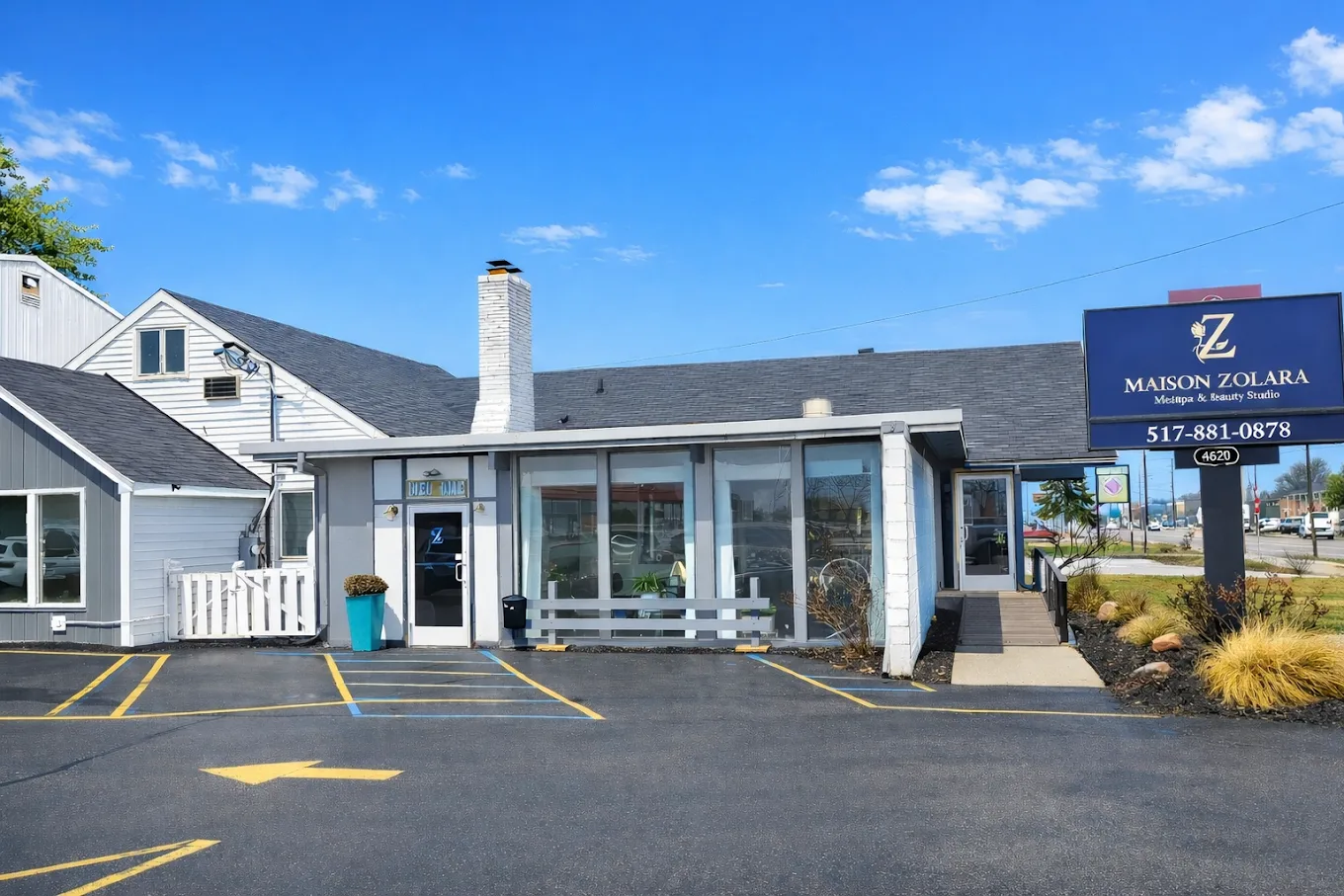
Maison Zolara is located at 4820 W Saginaw Hwy on the west Lansing corridor — easily accessible from East Lansing, Okemos, Holt, DeWitt, Grand Ledge, Mason, Charlotte, St. Johns, and Williamston. Patients routinely make the drive from across mid-Michigan for our combination of clinical expertise, MD supervision, and luxury medspa environment.
We are open 9:00 AM – 7:00 PM Monday through Friday and 9:00 AM – 5:00 PM on Saturdays. Free consultations are available by appointment.
Clinical References
Kang SH et al. Effect of poly-L-lactic acid and polydioxanone biostimulators on type I and III collagen biosynthesis. PMC / National Library of Medicine. 2024. https://pmc.ncbi.nlm.nih.gov/articles/PMC10999943/
Mlosek RK et al. Hydrolysis of polydioxanone sutures in contact with hyaluronic acid of different concentrations: an in vitro study. PMC / National Library of Medicine. 2025. https://pmc.ncbi.nlm.nih.gov/articles/PMC13008402/
Cobo R et al. Is More Always Better? A Randomized Comparative Clinical Trial About the Impact of Polydioxanone Threads Quantity for Facial Lifting. PubMed / National Library of Medicine. 2025. https://pubmed.ncbi.nlm.nih.gov/40236886/
National Laser Institute. PDO Threads Training for RNs — Facial and Body Contouring Certification. https://nationallaserinstitute.com/botox-and-dermal-filler-training/pdo-threads-training-for-rns/
Page Disclaimer: The information on this page is provided for educational purposes only and does not constitute medical advice. Clinical references are sourced from peer-reviewed research and named institutions as cited below. Individual results vary. Consult a qualified healthcare provider before beginning any treatment.
The Medical Director provides clinical oversight of treatments performed at this practice. The Medical Director does not author, review, or endorse website content.