Sculptra in Lansing, MI
Sculptra is not a traditional filler. It is a collagen biostimulator — an injectable that works with your body's own biology to rebuild the structural protein responsible for youthful skin firmness and volume. If you are looking for subtle, progressive rejuvenation that doesn't look "done," Sculptra may be the most strategic investment in your skin available today.
At Maison Zolara, located at 4820 W Saginaw Hwy in west Lansing, our licensed registered nurse (RN) clinicians perform every Sculptra treatment under the clinical oversight of our on-staff Medical Director. Sculptra starts From $850 per vial; Maison Circle members start From $750 per vial. Final pricing is confirmed at your complimentary consultation.
- ✓Sculptra (poly-L-lactic acid)
- ✓FDA-approved biostimulator
- ✓All skin types
- ✓MD-supervised
- ✓RN-performed
- ✓Free consultation
- ✓Package pricing available
How It Works
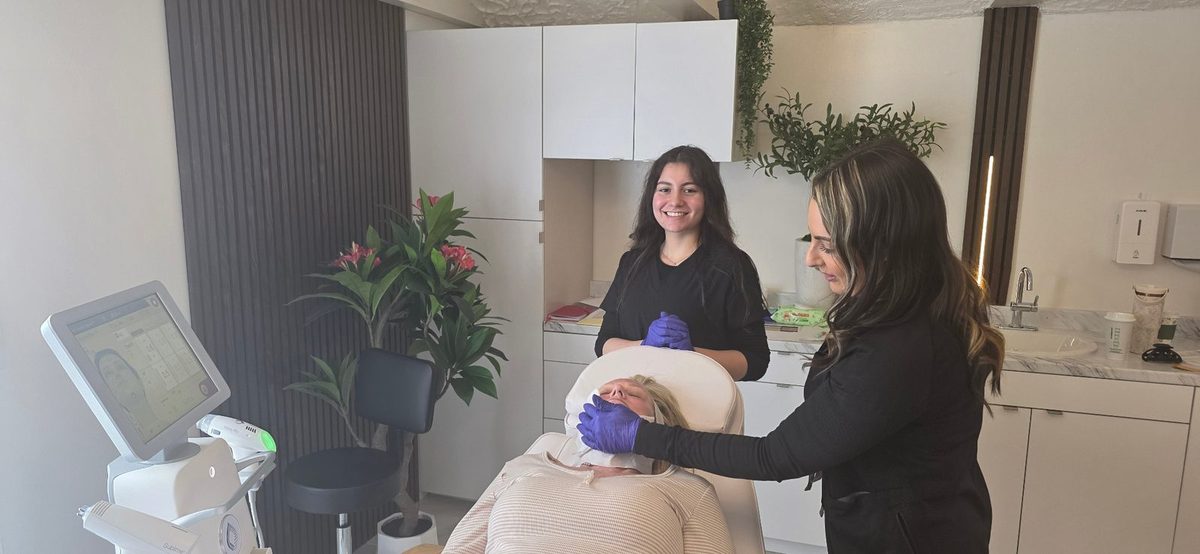
Sculptra (poly-L-lactic acid) is classified as a biostimulatory injectable, meaning its primary mechanism is triggering your body to produce new collagen rather than simply adding volume directly. When injected into the deep dermis and subcutaneous tissue, the PLLA microparticles act as a scaffold that stimulates fibroblast activity — the cells responsible for manufacturing collagen and elastin.
The results are gradual by design. Over the weeks and months following each session, new collagen fibers form around the PLLA particles. As the PLLA safely biodegrades — following the same metabolic pathway as lactic acid — the newly built collagen remains. The net effect is a natural-looking restoration of facial volume, improved skin texture, and a reduction in deep folds and hollowing that develops with age.
According to a 2022 clinical study report cited by Galderma, 95% of patients showed improved skin glow two years after Sculptra treatment, with results sustained through the end of the two-year study period.
PLLA has been used in human medicine for decades — including as a component of absorbable suture material — giving it one of the longest safety records of any injectable material in aesthetic medicine. According to a review published in the Journal of Drugs in Dermatology, "PLLA is a polymer of lactic acid, which has been used for 3 decades in the medical world as a part of suture material." ↗
According to a 2022 peer-reviewed study published in PMC / NCBI (National Center for Biotechnology Information), Sculptra received FDA approval in 2004 for HIV-associated lipoatrophy and in 2009 for correction of nasolabial folds and other facial wrinkles, and was first approved for aesthetic use in Europe in 1999. ↗
What It Treats
Sculptra addresses the root cause of facial aging — collagen loss — rather than masking its surface effects. Research suggests we lose approximately 1% of our collagen per year after our mid-twenties, and this cumulative deficit is what creates the hollow, deflated appearance many patients want to correct.
Facial Volume Loss
Sculptra restores lost volume in the cheeks, temples, and mid-face — areas that hollow with age — by rebuilding the collagen scaffold beneath the skin rather than simply filling space.
Deep Folds & Wrinkles
Nasolabial folds, marionette lines, and chin creases that develop from structural collagen loss respond well to Sculptra's gradual rebuilding approach, with results that look natural at every stage.
Skin Laxity & Texture
As new collagen forms, patients often notice improved overall skin quality — firmer texture, reduced fine lines, and a more luminous surface — beyond the targeted treatment areas.
Jawline & Contour
Sculptra can restore definition along the jawline and lower face, addressing the sagging and softening that occurs as underlying structural support diminishes over time.
Non-Surgical Body Contouring
Sculptra is used off-label for non-surgical body applications including the buttocks (non-surgical BBL), décolletage, and areas of skin laxity on the body. Candidacy for body applications is assessed at consultation.
Collagen Maintenance
Patients in their 30s and 40s use Sculptra proactively — before significant volume loss occurs — as a long-term collagen maintenance strategy that keeps the face looking naturally youthful.
About Sculptra
Sculptra (poly-L-lactic acid) is manufactured by Galderma and is the first and original FDA-approved PLLA collagen stimulator for facial aesthetics in the United States.
The Active Ingredient
Sculptra's active ingredient is poly-L-lactic acid (PLLA-SCA) — a synthetic, biodegradable polymer that has been used safely in human medicine for decades, including in absorbable sutures and orthopedic implants. It is fully biocompatible and metabolized by the body.
FDA Approval History
Sculptra received FDA approval in 2004 for HIV-associated facial lipoatrophy and in 2009 for correction of nasolabial folds and other facial wrinkles. In 2022, the FDA approved an additional indication for fine lines and wrinkles in the cheek area.
How It Differs from Fillers
Unlike hyaluronic acid (HA) dermal fillers — which add immediate volume by physically occupying space — Sculptra works by stimulating your own collagen production. Results are gradual and build over months, but the collagen formed is your own, making outcomes look and feel entirely natural.
Longevity
Clinical studies have documented Sculptra's treatment effects lasting up to two to three years. According to a 2024 peer-reviewed review published in PMC, "the long-term safety and efficacy of Sculptra have been well documented, with studies showing treatment effects lasting up to 2–3 years." ↗
Safety & Risks
Sculptra has a well-established safety profile when administered by trained clinicians using proper technique, dilution, and aftercare protocols. Understanding the risks — and how they are minimized — is an important part of informed consent.
Nodules & Granulomas: The most discussed risk with Sculptra is the formation of subcutaneous nodules or, rarely, granulomas. According to StatPearls (NCBI Bookshelf), early studies reported nodule rates as high as 20%; however, with updated protocols — including larger dilution volumes (7 mL or more), proper injection depth, and the 5-5-5 massage protocol — incidence has fallen significantly. ↗ At Maison Zolara, our licensed RN clinicians follow current best-practice dilution and injection protocols, and every patient receives written massage instructions before leaving the clinic.
Common, expected side effects include temporary redness, swelling, bruising, and tenderness at injection sites — these typically resolve within a few days. Less common risks include asymmetry, prolonged swelling, and the nodule risk described above.
Contraindications include active skin infection at the treatment site, known allergy to any ingredient in the formulation, and certain autoimmune conditions. A thorough medical history review is completed at consultation before any treatment is performed.
The Injector Matters: Nodule risk is substantially reduced by choosing a credentialed injector who uses proper dilution, correct injection depth, and provides clear aftercare instructions. Our licensed RN clinicians are trained in current PLLA injection protocols and perform all treatments under Medical Director oversight.
Sculptra vs. Other Injectables
Patients searching for "sculptra vs filler" or "is sculptra a filler" are often trying to understand whether Sculptra is the right choice for their goals. The honest answer is that Sculptra and traditional hyaluronic acid (HA) dermal fillers are fundamentally different tools — each with distinct strengths.
The table below compares Sculptra to the two most common alternatives. Neither option is universally superior; the right choice depends on your goals, timeline, and anatomy.
| Feature | Sculptra (PLLA) | HA Dermal Fillers | Radiesse (CaHA) |
|---|---|---|---|
| Mechanism | Collagen biostimulator | Volume replacement | Biostimulator + immediate filler |
| Onset of results | Gradual (weeks–months) | Immediate | Immediate + gradual |
| Duration | 2–3 years | 6–18 months (varies) | 12–18+ months |
| Reversibility | Not reversible | Reversible with hyaluronidase | Not reversible |
| Best for | Volume loss, skin quality, long-term collagen | Lips, precise contouring, quick results | Hands, cheeks, structural lift |
| Sessions needed | Typically 2–3 | Usually 1 | Usually 1–2 |
| FDA-approved | Yes (facial wrinkles, cheeks) | Yes (varies by product) | Yes (facial wrinkles, hands) |
Traditional hyaluronic acid dermal fillers are a distinct, faster-acting option with their own dedicated page at Maison Zolara — see our Dermal Fillers page for full details on HA filler options.
What to Expect
Sculptra builds results gradually over months — this is by design, not a limitation. Patients who understand the timeline are consistently among the most satisfied with their outcomes.
Before Your Treatment
Your journey begins with a complimentary consultation with one of our licensed RN clinicians. We review your medical history, discuss your aesthetic goals, assess your facial anatomy, and determine the appropriate number of vials and sessions. You will receive pre-treatment instructions including avoiding blood thinners (aspirin, ibuprofen, fish oil) for several days prior to reduce bruising risk.
During Treatment
Sculptra is injected using fine needles or cannulas into the deep dermis and subcutaneous tissue. A topical numbing cream is applied beforehand, and the PLLA solution is pre-mixed with lidocaine for additional comfort. Sessions typically take 30–45 minutes. Most patients describe the sensation as mild pressure with minimal discomfort.
After Treatment
Immediately after injection, the treated area may appear temporarily fuller due to the water in the solution — this resolves within a few days and is not the final result. You will receive written aftercare instructions including the 5-5-5 massage protocol: massage the treated area for 5 minutes, 5 times per day, for 5 days following each session. This step is clinically important for even distribution of the product and reduction of nodule risk. Mild swelling and bruising are common and typically resolve within 3–7 days.
Results Timeline
Most patients begin to notice gradual improvement at 4–6 weeks as new collagen forms. Full results from a complete series typically become visible at 3–6 months. Results can last 2 years or longer. Maintenance sessions every 1–2 years can sustain the collagen-building effect over time.
Aftercare
Proper aftercare is essential to achieving the best possible results from Sculptra and minimizing the risk of nodule formation. The most important step — the 5-5-5 massage — is non-negotiable and must be performed consistently for the five days following each session.
Pricing
Sculptra is priced per vial. The number of vials required depends on your anatomy, the degree of volume loss, and your treatment goals — this is determined at consultation.
- Standard pricing: From $850 per vial
- Maison Circle member pricing: From $750 per vial
- Series packages are available and offer the best per-vial value for patients completing a full treatment course
Most patients require 2–3 vials per session and 2–3 sessions spaced 4–6 weeks apart for a complete initial series. Final pricing is always confirmed at your complimentary consultation before any commitment is made.
Maison Circle members receive member pricing on Sculptra and can track their treatment journey in the Zolara Care app (available on the App Store).
Am I a Good Candidate?
Sculptra is an excellent option for a wide range of patients, but it is not the right choice for everyone. The following framework can help you self-assess — your clinician will make the final determination at consultation.
Patients from East Lansing, Okemos, Holt, and Mason regularly visit our west Lansing location for Sculptra consultations. If you are unsure whether Sculptra or a traditional hyaluronic acid filler is the better choice for your goals, our licensed RN clinicians are happy to walk through both options at your complimentary consultation.
Frequently Asked Questions
Related Treatments
Dermal Fillers in Lansing
Hyaluronic acid dermal fillers for immediate volume, lip enhancement, and precise facial contouring — a faster-acting complement or alternative to Sculptra.
RF Microneedling in Lansing
Candela Matrix RF microneedling for collagen remodeling, acne scar improvement, and skin texture refinement — pairs well with Sculptra for comprehensive skin rejuvenation.
Non-Surgical Skin Tightening
Candela Sublime skin tightening for mild to moderate laxity along the jawline and lower face — a non-injectable complement to Sculptra's collagen-building effects.
PRP Facial in Lansing
Platelet-rich plasma facial treatments that use your body's own growth factors to stimulate skin renewal — another regenerative approach to skin quality improvement.
Serving the Greater Lansing Area

Maison Zolara is located at 4820 W Saginaw Hwy in west Lansing, MI — conveniently accessible from across the greater Lansing region. We serve patients from Lansing, East Lansing, Okemos, Holt, DeWitt, Grand Ledge, Mason, Charlotte, St. Johns, and Williamston, as well as communities throughout mid-Michigan.
Our clinic is open 9:00 AM – 7:00 PM Monday through Friday and 9:00 AM – 5:00 PM on Saturdays. Free consultations are available for all new Sculptra patients — no commitment required.
Clinical References
Galderma. Sculptra FDA Approval for Cheek Wrinkles — Clinical Study Data. American Med Spa Association, 2022. https://www.americanmedspa.org/news/galderma-receives-fda-approval-for-sculptra-for-cheek-wrinkles/
Christen MO, Vercesi F. Collagen Stimulators in Body Applications: A Review Focused on Poly-L-Lactic Acid (PLLA). Clinical, Cosmetic and Investigational Dermatology. PMC. 2022. https://pmc.ncbi.nlm.nih.gov/articles/PMC9233565/
Fitzgerald R, et al. Safety of the Immediate Reconstitution of Poly-L-Lactic Acid for Facial and Body Treatment — A Multicenter Retrospective Study. PMC/NCBI. 2024. https://pmc.ncbi.nlm.nih.gov/articles/PMC11626369/
Alam M, et al. Advances in Poly-L-Lactic Acid Injections for Facial and Neck Rejuvenation. PMC/NCBI. 2024. https://pmc.ncbi.nlm.nih.gov/articles/PMC12323926/
Fitzgerald R, et al. Injectable Poly-L-Lactic Acid: Understanding Its Use in the Current Era. Journal of Drugs in Dermatology. 2016. https://jddonline.com/articles/injectable-poly-l-lactic-acid-understanding-its-use-in-the-current-era-S1545961616P0759X
Shridharani SM. Poly-L-Lactic Acid. StatPearls. NCBI Bookshelf. 2023. https://www.ncbi.nlm.nih.gov/books/NBK507871/
Cleveland Clinic. Sculptra: What It Is, Where It's Injected, Results & Risks. https://my.clevelandclinic.org/health/treatments/24676-sculptra
Page Disclaimer: The information on this page is provided for educational purposes only and does not constitute medical advice. Clinical references are sourced from peer-reviewed research and named institutions as cited below. Individual results vary. Consult a qualified healthcare provider before beginning any treatment.
The Medical Director provides clinical oversight of treatments performed at this practice. The Medical Director does not author, review, or endorse website content.
Sculptra® is a registered trademark of Galderma.